
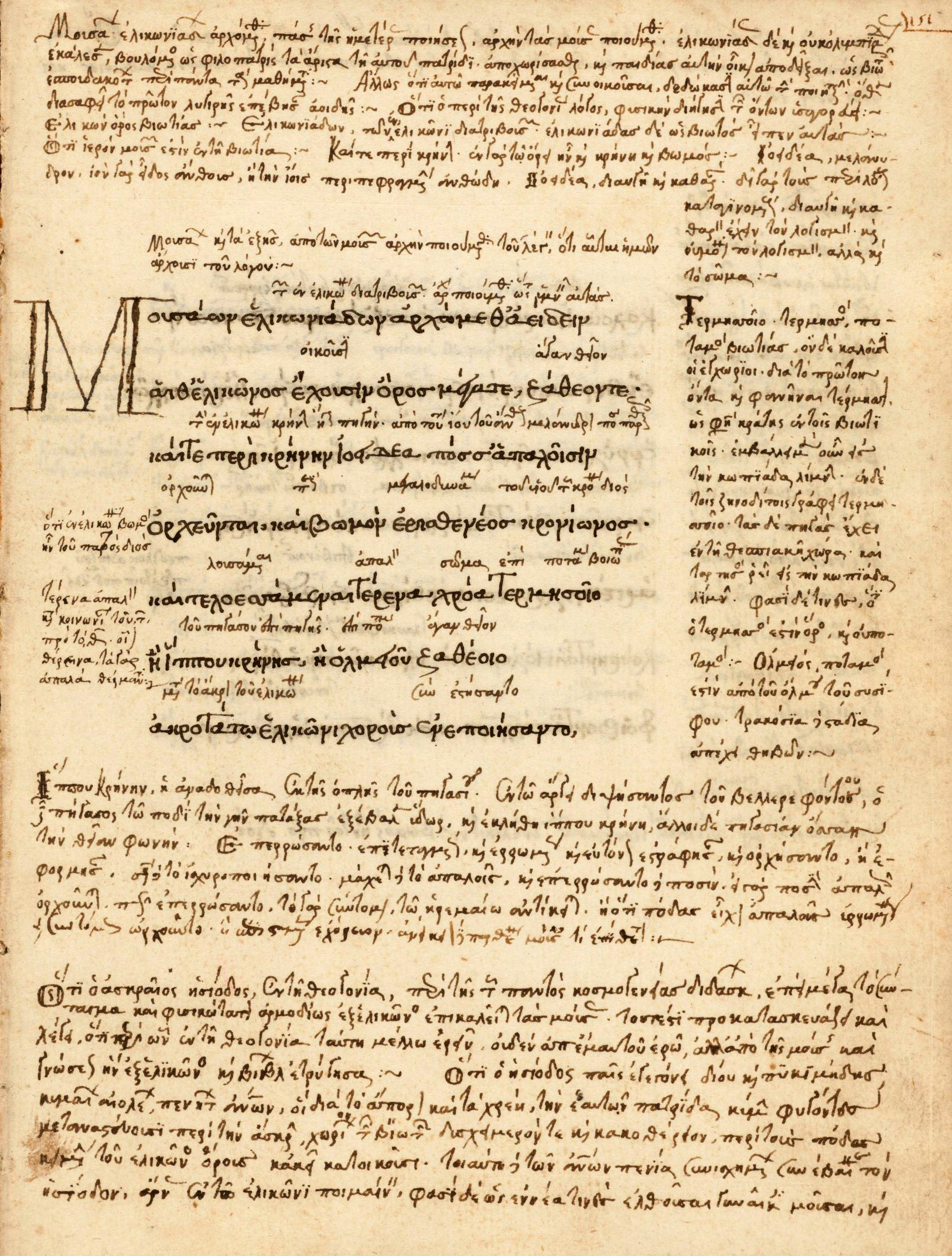
This module introduces students to the cultural and educational landscape of twelfth-century Byzantium with its rich engagement with ancient Greek literature. Taking John Tzetzes’ Allegories of Homer’s Iliad and Odyssey and his Carmina Iliaca as case studies, students explore how Byzantine scholars and teachers sought to make the ancient texts more accessible to new audiences: Eustathios’ linguistic commentaries helped readers navigate the archaic language, while Tzetzes’ works taught them how to find a deeper meaning in the epic narratives. Throughout the module, students reflect on the place of Homer’s epics in literary culture and educational canon: ancient Greek schoolboys, Byzantine empresses, and medieval grammarians are linked through these foundational texts to today’s classroom. By studying the mechanisms behind Tzetzes’ allegories, students explore the rhetorical and exegetical strategies that helped Byzantine audiences make sense of the ancient texts within their own world.